
What is Classical Catholic Liberal Arts?
At Notre Dame School, it means forming the whole child—mind, heart, and soul—through faith, reason, and the pursuit of truth, beauty, and goodness.
As administrators of the Diocese of Joliet’s only classical Catholic liberal arts grade school, we often hear the question: “What is classical Catholic liberal arts?”
From our perspective, a classical Catholic liberal arts education forms the whole child—mind, heart, and soul—by uniting faith and reason in the pursuit of truth, beauty, and goodness. In other words, it helps children learn to think clearly, love what is good, and see the world through the lens of faith.
It is “classical” because it uses time-tested ways of learning, including the Trivium, Great Books, Latin, and the arts. It is “Catholic” because Christ is at the center of every subject and every school day. It is “liberal arts” because it helps students cultivate the habits needed to think clearly, communicate well, grow in virtue, and live freely and responsibly.
Putting it all together, at Notre Dame School, this means children are known, challenged, and formed—academically, spiritually, and morally. Together with parents as primary partners, and under the patronage of our Blessed Mother, we help students grow in wisdom, build strong foundations for high school and beyond, and learn to live joyfully as disciples of Jesus Christ.
Let’s take a closer look.
Faith-Centered Learning
We form students in faith and teach them to think clearly, ask good questions, and seek what is true. Our classical Catholic teaching is not confined to a single subject or simply “added” to the curriculum—it shapes how students understand every subject and their place in God’s world.
Through prayer, sacramental life, and daily opportunities to encounter Christ, students grow in their understanding of God and their relationship with Him. In this way, all learning becomes an encounter with what is true, beautiful, and good.
This approach helps equip students to discover who they are and whose they are, establishing a foundation for strong academic performance, wise decision-making, meaningful friendships, and confident preparation for high school and beyond.
Five Pillars of Education
The classical liberal arts tradition forms students through practices and studies that cultivate wisdom, disciplined thought, wonder, and clear expression. Our instruction is built on five pillars that inspire students to grow in these areas.
The Trivium
The Trivium—grammar, logic, and rhetoric—forms disciplined minds by teaching students how to think with clarity, order, and purpose. Through this progression, students learn to discern truth from falsehood and communicate with confidence, reason, and integrity.
Great Books
Our Great Books curriculum invites students into conversation with the most influential writers and thinkers in literature, philosophy, theology, and history. By engaging these enduring works, students encounter timeless questions and develop the wisdom to seek truth across every discipline.
Latin
Latin strengthens the foundation of language, sharpening students’ vocabulary, precision, and understanding of grammar. This study also encourages disciplined, deep thought and fosters habits of careful, rigorous thinking.
God’s Divine Order
Across subjects, students learn to recognize order, meaning, and purpose in God’s creation—from numbers and nature to language, history, and theology. Together, our curriculum reveals a world that is beautiful, precise, and meaningful.
The Arts
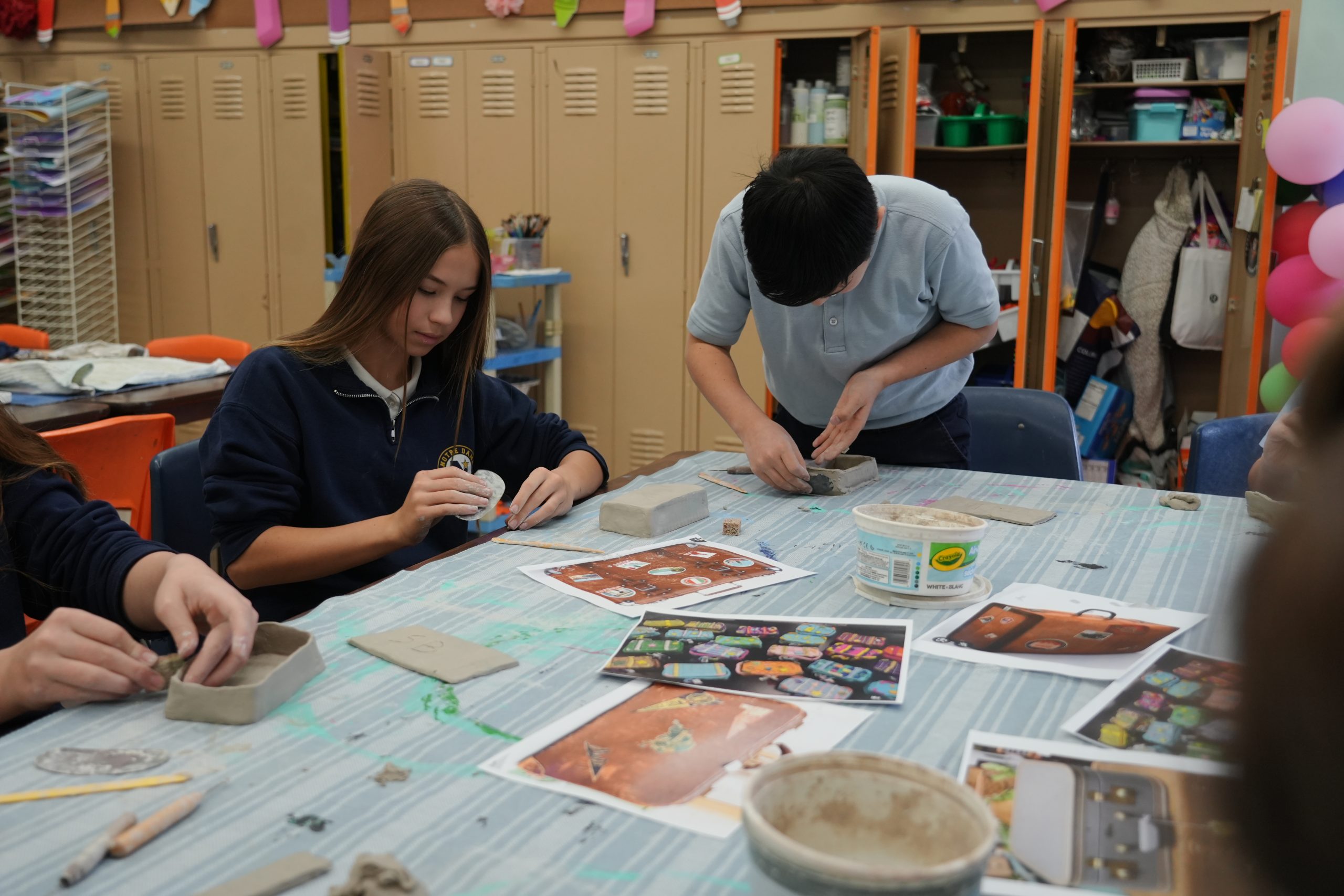
The arts awaken a love of beauty and provide students with meaningful ways to express what is true and good. Through music, visual art, and performance, students learn to communicate from the heart while inspiring and uplifting others.
Technology in Service of Formation
In support of classical Catholic liberal arts education, technology does not lead formation; it serves it. We prioritize authentic human interaction through teacher-led instruction and engaging discussions with classmates, helping students grow through personalized attention and relationships. We thoughtfully deploy digital tools when they enrich classroom experiences, foster creativity, or strengthen connections—when they genuinely support learning—so that students grow in wisdom and self-command as they learn to engage with today’s digital world.
Transforming Minds and Souls
The result is an education that endures. At Notre Dame School, classical Catholic liberal arts education forms students to know Christ and to grow in wisdom and virtue. It prepares them not only for high school, but for lives of faith, service, and freedom rooted in God’s truth.
This is the lasting gift of a classical Catholic liberal arts education: students who are prepared for high school and beyond, grounded in faith, formed in virtue, and equipped to think clearly, live wisely, and serve others with joy.
See Classical Learning in Action
Visit Notre Dame School to experience how faith, reason, and formation shape daily student life.